
Strength vs Hypertrophy vs Muscular Endurance: Which Should You Actually Train?
Here’s the short version: The difference comes down to how you lift. Strength training uses heavy weight and low reps to increase strength. Hypertrophy uses moderate weight and moderate reps to build muscle size. Muscular endurance uses lighter weight and high reps to resist fatigue. Same equipment, three different outcomes — and most people should train a blend, weighted toward their main goal.
Now the longer version.
People say "I want to start strength training" like it's a single activity. It isn't. How you lift, how heavy, how many reps, and how much rest decides what your body does with the work. Most of the confusion comes from chasing one goal while training for another.
Quick myth out of the way first: none of these will accidentally turn you into a bodybuilder. Building noticeable muscle is slow, deliberate work, and in reality that means it takes most women years of focused effort to get there on purpose, let alone by accident. Lifting heavy makes you strong, not bulky.
What is strength training (and what does it actually build)?
Training your body to move heavy loads. The goal isn't bigger muscles, but pure strength.
How it looks: heavy weight, low reps (roughly 1–5), long rest between sets (2–5 minutes), fewer total sets. It should feel hard and deliberate. The goal is clean, heavy reps.
Best for: getting genuinely strong, building bone density (a real long-term win for women), and making everything else like carrying things, lifting, and sports, easier.
What is hypertrophy training?
Training to make muscles bigger. This is the "toned" look people actually mean when they say toned. There's no separate toning mode - just muscle, plus low enough body fat to see it.
How it looks: moderate weight, moderate reps (roughly 6–12, though a wider range works if you push close to failure), shorter rest (1–2 minutes), more total volume. The real driver is taking sets close to the point where you couldn't manage many more reps. Expect a pump.
Best for: shape and definition, a faster resting metabolism (more muscle burns more calories at rest), and a base of muscle that makes both strength and endurance work more effective.
What is muscular endurance training?
Training muscles to resist fatigue and keep producing force over time.
How it looks: lighter weight, high reps (15+), short rest, lots of total reps.
Best for: stamina for repeated movement, but it is weaker as a standalone driver of how your body looks.
Quick comparison
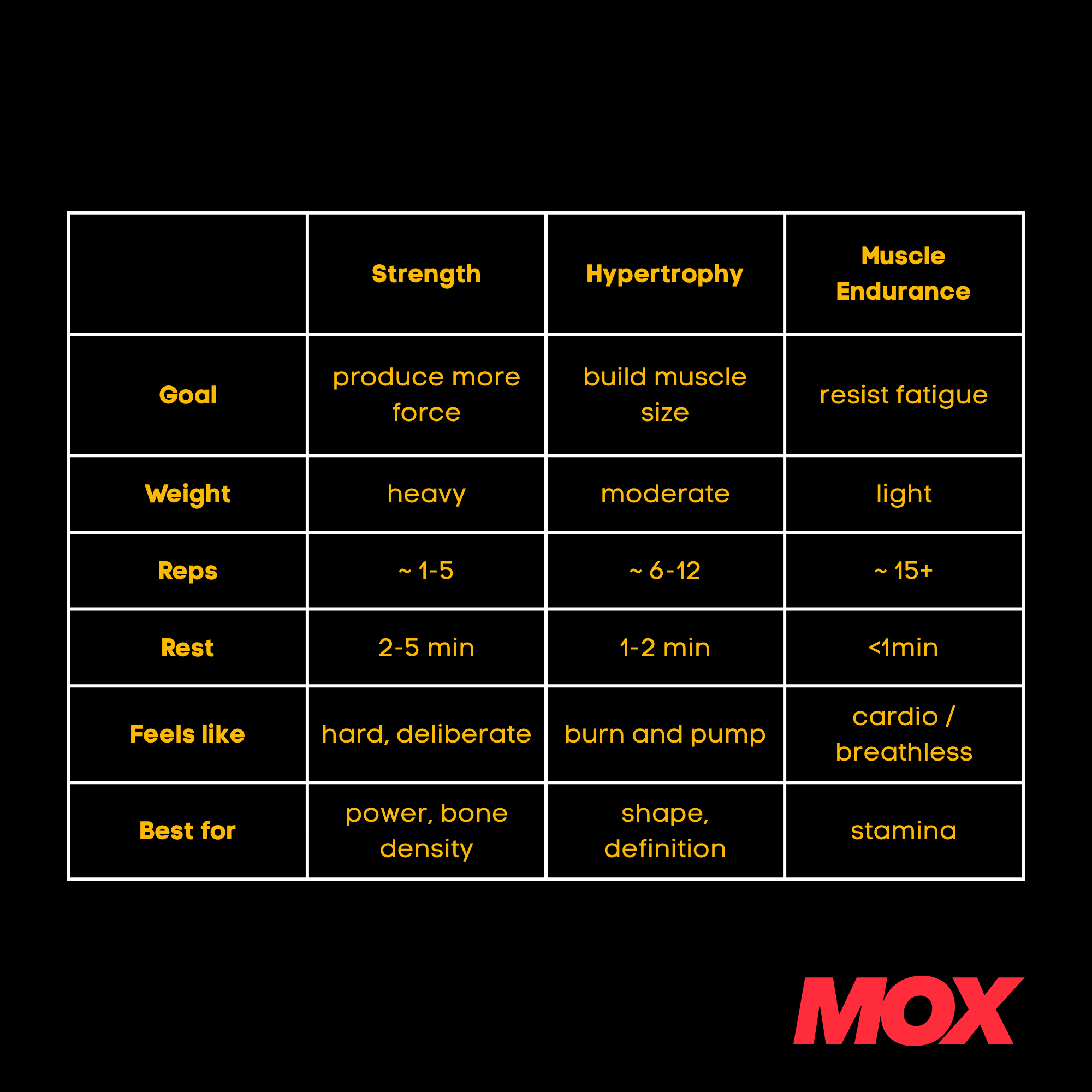
Aren't these basically the same thing?
Think of it as a spectrum: heavy and low-rep on one end, light and high-rep on the other, hypertrophy in the broad middle. They overlap. Train for strength and you'll build some muscle. Train for size and you'll get stronger. The labels describe where you're putting the emphasis, not hard walls between separate worlds.
Which one should you actually train?
Depends on what you want, and for most people the honest answer is "a mix," tilted toward your main goal.
Want more shape and definition: lead with hypertrophy.
Want to get strong and feel powerful: lead with strength.
Training for a repetitive activity: build a strength and hypertrophy base first, then layer endurance on top.
Brand new to lifting: start broad. Almost any consistent training works at the beginning, and a general base in the 6–12 rep range builds muscle and strength at the same time while you learn the movements.
The part that actually matters
Whatever lane you pick, the non-negotiables are the same: lift with enough effort to genuinely challenge yourself, add a little over time (progressive overload), and show up consistently. The rep ranges fine-tune the result. Consistency is what creates it in the first place.
FAQ
Will lifting heavy weights make me bulky? No. Building visible muscle is slow, deliberate work, and women's hormonal profile means significant size takes years of focused effort. Lifting heavy builds strength and density, not bulk.
How many reps build muscle vs strength? Roughly 6–12 reps with moderate weight is the classic range for muscle size (hypertrophy). 1–5 reps with heavy weight builds maximal strength. The ranges overlap, and training effort matters more than hitting an exact number.
Can you train for strength and muscle size at the same time? Yes — especially as a beginner, when a general 6–12 rep range builds both at once. More experienced lifters get better results by emphasising one goal per training block while maintaining the other.
